




6 Installation Mistakes That Can Ruin a Railing System
When it comes to installing a cable railing system, precision is everything. Even the highest-quality materials can fail to perform—or worse, become unsafe—if installed incorrectly. Whether you’re a contractor or a DIY enthusiast, avoiding these five common mistakes is essential to achieving a long-lasting, code-compliant, and visually clean railing system.
1. Ignoring Post Alignment and Spacing
Posts that are out of plumb or spaced too widely apart are among the most common—and expensive—installation errors. For cable railing systems to maintain constant tension, exact post alignment and spacing are essential. A weak or ugly system can result from cables that sag or pull unevenly due to posts that are skewed or too widely separated.
Avoid it: Stick closely to the manufacturer’s recommended spacing—no more than 4 feet between posts in most cases—and check alignment frequently during installation. SC&R systems are engineered with exact tolerances in mind, so accuracy from the start is key. Don’t eyeball it—measure and verify.
2. Misunderstanding Cable Spacing Requirements
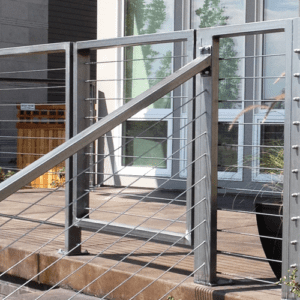
It’s a frequent misconception that because building standards forbid a 4-inch sphere from passing through the railing, cables must be placed precisely 4-inch apart. This interpretation is dangerously incomplete, even though the code reference is accurate.
Cables, even when fully tensioned, are not rigid—they flex under pressure. If spaced precisely 4″ apart, they can deflect just enough for a 4″ sphere to pass through, causing the system to fail inspection. That’s exactly how most inspectors test compliance—by applying force with a 4″ ball, not just checking passive spacing.
Avoid it: SC&R recommends cable spacing no greater than 3″ to ensure compliance under real-world conditions. This tighter layout accounts for cable flexibility and helps your railing pass inspection the first time. It also enhances safety, especially on stairs or elevated platforms where fall protection is critical.
3. Over- or Under-Tensioning the Cables
Proper cable tension is essential. The cables will sag or rattle inside the posts if they are too loose. If it’s too tight, you run the chance of overtaxing the hardware and posts, which could cause problems down the road.
Avoid it: Tighten the cables until there is no rattling in the posts and they feel firm, like a guitar string that has been correctly tuned. They only need to be uniformly tensioned throughout the system. Carefully follow SC&R’s installation instructions, then a few days later, quickly inspect the cables to make sure everything is stable.
4. Using the Wrong Tools or Fasteners
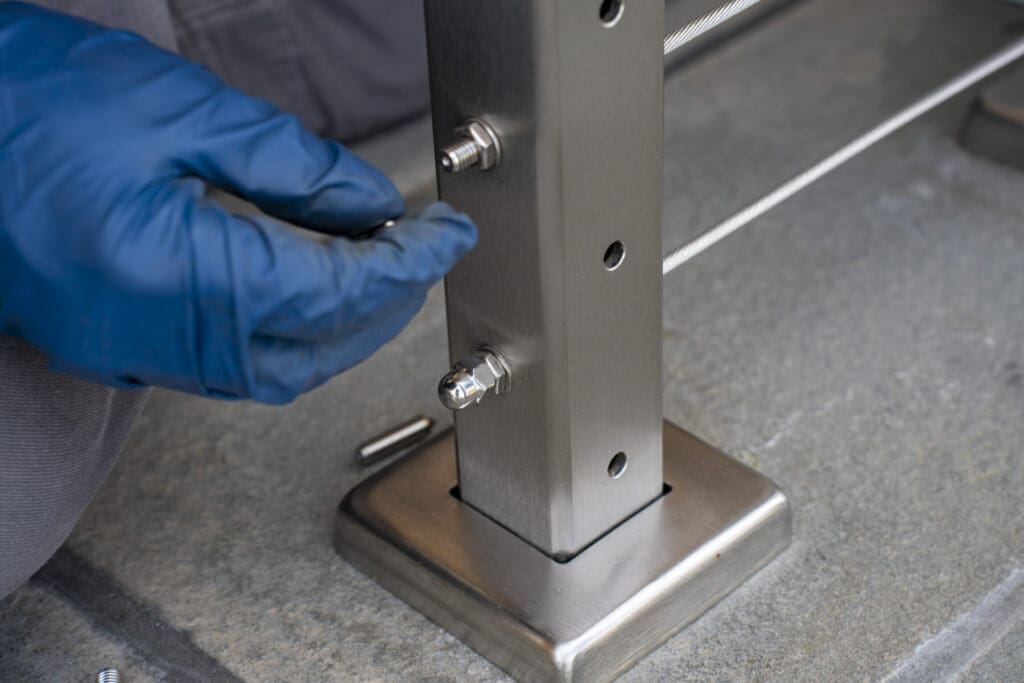
Cable railing systems commonly contain stainless steel hardware and precision-cut fittings. Stripping, corrosion, or weak attachment points might result from using the wrong tools or inappropriate fasteners (carbon steel screws on stainless posts, for example).
Avoid it: Purchase premium installation equipment, such as swaging tools, cable cutters, and driver bits that are rated for stainless steel. Use SC&R-recommended or supplied fasteners at all times for optimal compatibility and longevity.
5. Cutting Cables Before Measuring Twice
One bad cut can ruin a full cable run. It’s tempting to start trimming cables before dry-fitting the system, but cutting prematurely often leads to waste, rework, and frustrating delays.
Avoid it: Fully install all posts and fittings, measure exact cable lengths in-place, then cut. SC&R offers pre-measured kits and cut-to-length options to simplify this step—use them to your advantage.
6. Neglecting Local Building Codes
If the railing system fails inspection, it won’t matter how beautiful it is. Code infractions pertaining to height clearances, load limitations, or spacing can cause delays in projects or necessitate expensive adjustments.
Avoid it: Review local codes before beginning installation. SC&R systems are designed to meet or exceed most residential and commercial building codes, and our team can help answer compliance questions before you build.
Final Thoughts
If installed improperly, even the best railing system may not meet expectations. Maintaining the security, robustness, and streamlined design that characterize SC&R systems requires avoiding these frequent errors. Careful planning and meticulous attention to detail throughout installation will guarantee that your railing looks fantastic—and functions even better—for many years to come, regardless of whether your project comprises a deck, balcony, or staircase.
Need help with a specific system or situation? Reach out to our team at 888-686-7245 or download our installation guide to get started at mcstaging.stainlesscablerailing.com.